Blood glucose negative feedback
Blood sugar is controlled by a four-step negative feedback loop:
- Glucose absorbed from food raises blood glucose.
- Elevated glucose stimulates pancreatic beta cells to release insulin.
- Insulin lets liver, muscle, and fat cells absorb and store glucose, lowering blood levels.
- When glucose drops below threshold, insulin release ceases.
Basal insulin oscillates in the blood after a meal, which helps keep insulin receptors on target cells sensitive.
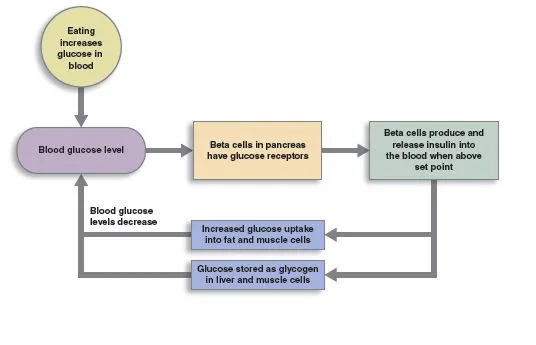 Figure: Control of blood sugar by negative feedback. Credit: Lumen Learning / OpenStax, CC BY 4.0.
Type 1 diabetes
- Caused by autoimmune destruction of pancreatic beta cells, producing a complete lack of insulin.
- Can also result when the pancreas is surgically removed.
- Affected individuals cannot make their own insulin and require daily insulin injections.
Type 2 diabetes
- The more prevalent form.
- Caused by insulin resistance — tissues do not respond effectively to normal insulin levels.
- The pancreas keeps producing insulin initially; over time secretion declines, but this is secondary to the resistance.
- Usually develops in adulthood (increasingly seen in younger people) and is associated with obesity and a sedentary lifestyle.
- Many cases go undiagnosed despite serious health consequences.